The Family-Style Difference: Assisted Residing In Small Elderly Care Houses
Business Name: BeeHive Homes of Mesquite
Address: 780 2nd S St, Mesquite, NV 89027
Phone: (702) 381-6899
BeeHive Homes of Mesquite
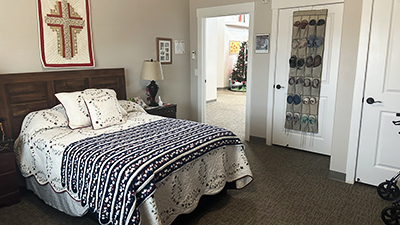
At BeeHive Homes of Mesquite, Nevada, we offer the finest assisted living experience available in a cozy, comfortable homelike setting. Each of our residents has their own spacious room with an ADA approved bathroom and shower. We prepare and serve delicious home-cooked meals three times a day every day. We maintain a small, friendly elderly care community. We provide regular activities that our residents find fun and contribute to their health and well-being. Our staff is attentive and caring and provides assistance with daily activities to our senior living residents in a loving and respectful manner. We would like to invite you to tour and experience our assisted living home and feel the difference.
780 2nd S St, Mesquite, NV 89027
Business Hours
Families typically begin taking a look at assisted living when life at home has tipped from "workable with a little assistance" to "somebody could get injured if we keep going like this." That shift is emotional, not simply logistical. You are not looking for a product, you are trying to safeguard both security and dignity.
Most individuals picture assisted living as a large building with a lobby, an activity calendar posted by the elevator, and long hallways of identical doors. Those neighborhoods can work well for numerous older grownups. Yet over the last 10 to 20 years, a quieter choice has actually grown: small, family-style elderly care homes operating in residential neighborhoods, often with 4 to 10 residents.
Having dealt with families positioning loved ones in both models, I have seen the same concern come up once again and again: does a small, family-style setting truly make a difference, or is it simply a marketing phrase?
The short response is that it can make an extensive difference, however only when the home is well run and the match is right. The information matter. Let us go through those information with real-world texture instead of slogans.
What "family-style" actually means in assisted living
"Family-style" gets utilized so frequently in senior care marketing that it runs the risk of losing meaning. In a strong small home, it generally indicates three attributes that alter the daily experience for residents.
First, scale. Rather of 80 to 120 residents, you might have 6 or 8. That alone moves almost whatever: how meals work, how personnel interact, how rapidly someone is seen if they look weak, and how versatile the regimen can be.
Second, environment. These homes are frequently routine houses that have been adapted for elderly care. Believe single story or with a stair lift, broad doorways, get bars, and an available bathroom, but still a front patio and a yard. Homeowners stroll into a living room, not a lobby.
Third, culture. The better small homes run more like a big extended household than a center. Personnel typically cook in the same cooking area, share meals at the exact same table, and develop long-term relationships with citizens and families. I have actually seen caregivers who understand exactly how Mr. Alvarez likes his coffee and which gospel tune will relax Ms. Johnson throughout sundowning, without checking a chart.
Of course, "family-style" can also be used to gloss over a lack of professional structure. When you tour any small elderly care home, you ought to feel both the heat of household and the backbone of a genuine assisted living operation: clear care plans, medication management, and accountability.
A day in a small elderly care home
It is much easier to comprehend the family-style difference if you imagine an actual day.
Morning does not start with a loud overhead statement at 7:00 a.m. Locals generally wake by themselves rhythms. One person might be assisted up at 6:30 since he always liked an early start. Another may sleep up until 8:30. Care staff work through the house, knocking gently on doors, aiding with bathing, brushing teeth, and wearing familiar clothes from each resident's own closet.
Breakfast often smells like home. Bacon, oatmeal, or eggs cooking in the cooking area carry through the rooms. Residents drift towards the dining table or, if needed, are wheeled there. No one is swiping meal cards or standing in buffet lines. Staff understand who chooses a small portion and who will request seconds.
Late early morning might involve basic activities: a puzzle at the kitchen table, folding towels, tending plants, or resting on the porch if the weather works together. In larger assisted living neighborhoods, activities can feel more structured and in some cases theatrical, which some homeowners enjoy. In small homes, engagement looks more like daily life. The caretaker might do a light workout regimen with 2 individuals in the living-room, while another resident sees the birds through the window and talk about each one.
Afternoons often decrease, and that is by style. Numerous older adults have actually restricted stamina. After lunch, several homeowners nap in their own spaces. Personnel use this time for quiet care tasks: refilling supplies, completing documents, and preparing for the evening. If somebody wakes baffled or anxious, they are not roaming down a long corridor to find help. They open their door and they are practically right away visible to staff.
Dinner may be a shared meal with a going to family member pulling up a chair. In excellent homes, staff include homeowners in small, significant contributions: stirring a bowl, choosing which vegetables to serve, or setting spoons on the table. Those are not just "activities" however methods to maintain autonomy.
At night, the family-style difference becomes specifically concrete. In larger neighborhoods, staffing typically drops and caregivers cover an entire wing. In a small care home with, state, 6 homeowners, it is possible to have a couple of staff on duty who can hear somebody call out. Nighttime restroom trips are much shorter and more secure, due to the fact that the range from bed to bathroom is actually a couple of steps, and support is close.
Daily life in these homes can feel less like an arranged program and more like life unfolding in a safe, carefully structured household.
Assisted living: small vs big communities
Families sometimes frame the choice as "intimate care vs more services," and there is some fact in that. The trade-off is not absolute, though, and good small homes significantly provide robust services.
Here is an easy contrast that reflects what I have observed across numerous positionings:
- Environment: Small homes feel residential, with familiar furnishings and home-style kitchens. Larger assisted living communities feel more like a hotel or school, with public areas and clear separation between "staff" and "residents."
- Relationships: In a small home, locals and caretakers frequently understand each other deeply. Turnover still takes place, however connection is stronger. In big communities, homeowners may engage with much more individuals, which can be stimulating for some and overwhelming for others.
- Flexibility: Small homes can adjust regimens quickly. If a resident starts sleeping later on, staff merely adapt. In larger settings, modification often moves slower since policies should work for lots of residents at once.
- Amenities: Big neighborhoods usually win on features: physical fitness spaces, beauty salons, numerous activity spaces. Small homes normally focus on core assisted living and elderly care services rather than extras.
- Clinical depth: Some large assisted living campuses have nurses on site 24/7 and therapy clinics within the structure. Small homes differ extensively. Some contract with home health and hospice to bring services on website; others rely mainly on caregivers and off-site medical visits.
The best choice depends less on abstract functions and more on the specific individual. A highly social 78-year-old who enjoys occasions may prosper in a larger senior care community. An 89-year-old with moderate dementia who gets anxious in crowds may settle perfectly into a quieter, small elderly care home.
Safety, staffing, and real-world risk
No household wants to discover that "home-like" indicates "casual" in the incorrect methods. Quality small homes combine warmth with strenuous attention to security, staffing, and care protocols.
Staffing ratios are a good starting point, but they are not the whole story. In a small home, a seemingly low ratio like one caretaker for each 3 or 4 locals can be effective due to the fact that presence is so high. A team member seated at the cooking area table can see down the corridor and into the living location simultaneously. There are fewer blind areas. If a resident starts to stand from a chair unsteadily, assistance is just a few actions away.
In contrast, a huge building might have a solid ratio on paper but still battle with delayed response times if caretakers are spread across long passages or numerous floorings. I keep in mind one family who moved their father from a large assisted living building to a 7-bed home after duplicated falls in his bathroom that nobody heard. In the smaller home, merely having the restroom 10 feet from the typical area, with personnel near, cut his falls dramatically.
Medication management is often tighter in well-run small homes because just a handful of homeowners are on the schedule. The caretaker or med tech knows precisely who takes what at 8 a.m., 2 p.m., and bedtime. Mistakes can still take place, which is why you must constantly ask to see the medication administration procedure during a tour. However the intimacy can work in favor of safety.
Of course, small size does not automatically equal safe. Warning include:
Caregivers appearing hurried since a single person is covering a lot of residents, especially throughout peak times like mornings.
Lack of clear documentation about care strategies, falls, or changes in condition.
No visible system for medication tracking, such as a MAR (medication administration record) or blister packs.
Strong small homes frequently work closely with going to nurses, physicians, home health, and hospice providers. They may set up routine visits on website to handle chronic conditions, evaluation medications, and monitor skin integrity or weight. This hybrid model, blending assisted living support with external medical services, can work well and keep locals steady longer.
The psychological reality: belonging vs institutional feel
On paper, households examine prices, care levels, and staff qualifications. In practice, the emotional "fit" typically determines whether a positioning thrives.
Many older grownups who withstood traditional assisted living have actually accepted a transfer to a small elderly care home since it seems like a house, not a center. They can sit at the cooking area counter and chat while someone cooks. They can step into the backyard and odor real lawn. The visual cues state "home," not "organization," which reduces the mental blow of leaving one's own residence.
That stated, not everyone wants a small, tight-knit environment. Some citizens choose the privacy of a bigger senior care neighborhood, where they can join activities when they choose and pull away to their home without sensation observed. In a small home, personal privacy should be secured intentionally, since the scale welcomes continuous interaction. Look for homes that:
Respect closed doors as private space unless there is a security concern.
Offer small nooks or peaceful areas where a resident can read, listen to music, or enjoy a program without continuous chatter.
Balance family-style meals with flexibility, such as permitting a resident to eat in their room periodically when they feel weak or just tired.
The psychological tone of the home typically shows the management. If the owner or manager speaks respectfully of locals, concentrates on their strengths, and coaches personnel to do the very same, you generally feel that in the atmosphere almost immediately.
Respite care in a small home: a trial run that matters
One of the surprise strengths of small assisted living homes is how well they can offer respite take care of brief stays. Family caretakers frequently strike a point where they need a week or 2 to recuperate, travel, or attend to their own health. A small home can use a momentary bed, with complete elderly care services, without the overwhelm of a big building.
Short-term respite stays serve two purposes. Initially, they offer the main caretaker a real break, which can postpone permanent positioning and lower burnout. Second, they work as a low-stakes trial for the older adult. You can see how they adapt to having help with bathing, dressing, and medications, and how they respond to the social environment.
I recall a daughter who brought her mother, living with moderate dementia, into a small home for a 10-day respite while she underwent surgery herself. The mother was adamant that this was "just for while my child assisted living BeeHive Homes of Mesquite needs to rest." Those 10 days sufficed for her to experience the feeling of not being alone in the evening, of having somebody close by if she woke puzzled. Six months later on, when a move was plainly required, she picked that same home without resistance and described it as "the location where they understand how to make my tea."
When evaluating respite care in a small home, ask whether the services and staffing are really the like for long-term homeowners. A well-run home should not downgrade care just because the stay is brief. Respite ought to feel like a practical glance of life there.
Questions to ask when visiting a small elderly care home
Families frequently tell me they feel overwhelmed by what to ask, specifically if they are checking out a number of alternatives. A focused set of questions assists you look past the fresh paint and friendly smiles.
Here is a succinct list to bring with you:
- "Who owns this home, and how typically are they on site?" Direct owner participation can be a strength if it features accountability, not micromanagement.
- "What is your common staffing pattern, by time of day?" Listen for specifics: the number of caregivers at 7 a.m., 3 p.m., and overnight.
- "Tell me about the last time a resident's health changed quickly. What took place and how did you respond?" Genuine stories reveal the true process.
- "How do you deal with medical consultations, emergencies, and hospital discharges?" You would like to know who collaborates, who carries, and how communication flows.
- "Can I talk with a current resident's family?" Referrals matter, particularly in small homes where online evaluations might be sparse.
Pay attention not only to the content of the responses, however likewise to how comfortable staff appear discussing less-than-perfect scenarios. A mature operation acknowledges that falls, hospitalizations, and behavioral difficulties take place in senior care, and it discusses its method clearly.
Who prospers in a family-style home, and who may not
Not every older adult is an ideal match for a cottage design, which is not a failure of the design. It is just a matter of fit.
People who tend to do well consist of those with:
Mild to moderate dementia who are soothed by routine, familiar surroundings, and a small circle of people.
Mobility challenges that make navigating big structures challenging, such as those utilizing walkers or wheelchairs who tire quickly.
A long history of valuing home life over crowds and official events.
A strong need for peace of mind and close relationships with caregivers.
On the other hand, you may prefer a larger assisted living community if your member of the family:
Is highly social and delights in a wide range of structured activities, from lectures to big musical performances.
Is younger or more physically active and desires a health club, walking paths, or arranged getaways a number of times per week.
Needs access to on-site scientific services at all hours, such as a nurse who can manage complicated medical equipment or regular competent interventions.
Another edge case involves behavioral signs. Some small homes are excellent with locals who roam, call out frequently, or have periodic agitation, because the setting is foreseeable and personnel know them well. Others are not geared up to handle these scenarios securely. Ask directly what habits they can and can not manage, and what would activate a request for discharge.
How to read the subtle indications during a visit
Beyond formal questions, some of the most important info comes from what you observe, not what you are told.
Watch how staff talk to citizens. Do they lean down to eye level, use names, and await reactions? Or do they discuss locals as if they are not provide? One quiet but powerful indication is whether personnel acknowledge nonverbal cues, such as using a blanket when somebody shivers or a rest when somebody looks fatigued however says they are "fine."
Look at the rhythm of your house. Is everyone lined up in front of a tv, or are there small clusters of different activities? You do not need a continuously buzzing environment, but a complete lack of engagement can be a warning.
Glance into restrooms and around corners. Cleanliness in the less visible areas states more than the front room. Smells in elderly care settings can take place, especially after a current accident, however consistent smells of urine generally suggest insufficient cleansing or incontinence management.
Notice whether homeowners appear groomed in manner ins which match their history. A guy who always wore slacks now in stained sweatpants might signal an inequality between the home's style and his identity, or just staffing that is cutting corners on personal care. For a lady who constantly loved her hair set, seeing her hair brushed and pinned back nicely can be a sign that the staff take notice of individual preferences.
Most of all, try to envision your loved one waking up there, shuffling into the kitchen area, hearing familiar voices. Does the image feel bearable, even somewhat comforting? Or does it make your stomach clench? Your own instincts, informed by careful observation, are a beneficial tool.
Cost, transparency, and what households often miss
Financially, small homes can be similar in expense to conventional assisted living, but the structure of charges might differ. Some charge a flat rate that consists of most care requirements, while others utilize a tiered system that increases as care requirements grow. Since these homes are often individually owned, there can be more versatility in personalizing a plan, but likewise more variation in how costs are communicated.
Ask for a written breakdown of what is consisted of and what sets off added fees. Help with bathing, dressing, toileting, and medications should be plainly specified. If your loved one currently needs hands-on assistance a number of times a day, press for specifics: how many assists per day are consisted of, and what occurs if those needs double?
Families also undervalue the psychological expense of moving consistently. One benefit of some small homes is their ability to support residents all the method through end of life, in partnership with hospice services. Others are less geared up for late-stage care and may need a relocate to an experienced nursing center when requires increase.
Clarify:
Whether they have supported residents through end of life previously, and how that worked.
What kinds of medical devices they can accommodate, such as oxygen, medical facility beds, or feeding tubes.
Their policy on hospital readmissions. Some homes can take homeowners back quickly after a health center stay; others might think twice if needs escalated.
The fewer disruptive moves your loved one experiences, the better their stability, particularly when dementia is involved.
Choosing with clarity, not guilt
When households stand at this crossroads, regret often shadows every decision: guilt about "putting Mom in a home," regret about not having the ability to supply 24/7 care personally, or guilt about considering monetary limitations. That guilt can misshape judgment and make you vulnerable to sleek marketing.
Small, family-style elderly care homes are not a wonderful response. They can, however, provide a mild, human-scale option that appreciates both security and uniqueness, particularly for those who discover bigger buildings confusing or impersonal.
The path forward is to integrate your intimate knowledge of your loved one with clear-eyed assessment of each choice. Visit more than when, at various times of day. Usage respite care if you can to test the waters. Ask tough concerns, and listen to how they are addressed. Notification how you feel leaving the house.
Assisted living, at its best, is not about warehousing older adults. It has to do with building a small, sturdy community around them when the initial family structure can no longer bring the full load. In a well-run small elderly care home, that community can look and feel a lot like household, with all the common rhythms of shared meals, familiar voices, and the peaceful self-confidence that somebody is close by if assistance is needed.
BeeHive Homes of Mesquite provides assisted living care
BeeHive Homes of Mesquite provides respite care services
BeeHive Homes of Mesquite supports assistance with bathing and grooming
BeeHive Homes of Mesquite offers private bedrooms with private bathrooms
BeeHive Homes of Mesquite provides medication monitoring and documentation
BeeHive Homes of Mesquite serves dietitian-approved meals
BeeHive Homes of Mesquite provides housekeeping services
BeeHive Homes of Mesquite provides laundry services
BeeHive Homes of Mesquite offers community dining and social engagement activities
BeeHive Homes of Mesquite features life enrichment activities
BeeHive Homes of Mesquite supports personal care assistance during meals and daily routines
BeeHive Homes of Mesquite promotes frequent physical and mental exercise opportunities
BeeHive Homes of Mesquite provides a home-like residential environment
BeeHive Homes of Mesquite creates customized care plans as residents’ needs change
BeeHive Homes of Mesquite assesses individual resident care needs
BeeHive Homes of Mesquite accepts private pay and long-term care insurance
BeeHive Homes of Mesquite assists qualified veterans with Aid and Attendance benefits
BeeHive Homes of Mesquite encourages meaningful resident-to-staff relationships
BeeHive Homes of Mesquite delivers compassionate, attentive senior care focused on dignity and comfort
BeeHive Homes of Mesquite has a phone number of (702) 381-6899
BeeHive Homes of Mesquite has an address of 780 2nd S St, Mesquite, NV 89027
BeeHive Homes of Mesquite has a website https://beehivehomes.com/locations/mesquite/
BeeHive Homes of Mesquite has Google Maps listing https://maps.app.goo.gl/FouNDQWSGjDorrdT7
BeeHive Homes of Mesquite has Instagram page https://www.instagram.com/beehivehomesmesquite/
BeeHive Homes of Mesquite has an TikTok page https://www.tiktok.com/@beehivehomesofmesquite
BeeHive Homes of Mesquite has an YouTube page https://www.youtube.com/@hamiltonshives4468
BeeHive Homes of Mesquite won Top Assisted Living Homes 2025
BeeHive Homes of Mesquite earned Best Customer Service Award 2024
BeeHive Homes of Mesquite placed 1st for Senior Living Communities 2025
People Also Ask about BeeHive Homes of Mesquite
What is BeeHive Homes of Mesquite Living monthly room rate?
Our base rate is $4,400/month plus a one-time community fee of $1,500. We do an assessment of each resident's needs upon move-in, so a resident's rate may be slightly higher. Based on the assessment, a resident may be in Tier I, II, or III with pricing from $4,900 to $5,300 per month. However, we do not add any "a la carte" charges after that rate is set. There are no add-ons or hidden fees
Does Medicare or Medicaid pay for a stay at Bee Hive Homes?
Medicare pays for hospital and nursing home stays, but does not pay for assisted living. Some assisted living facilities are Medicaid providers, but we are not. We do accept private pay, long-term care insurance, and we can assist qualified Veterans with approval for the Aid and Attendance program
Do we have a nurse on staff?
We do have a nurse on contract who is available as a resource to our staff but our residents' needs do not require a nurse on-site. We always have trained caregivers in the home and awake around the clock
What can you tell me about the food at Bee Hive?
You have to smell it and taste it to believe it! We use dietitian-approved meals with alternates for flexibility, and we can accommodate needs for different texture and therapeutic diets. We have found that most physicians are happy to relax diet restrictions without any negative effect on our residents
Do we have a pharmacy that fills medications?
We do have a relationship with an excellent pharmacy that is able to deliver to us and packages most medications in punch-cards, which improves storage and safety. We can work with any pharmacy you choose but do highly recommend our institutional pharmacy partner
Where is BeeHive Homes of Mesquite located?
BeeHive Homes of Mesquite is conveniently located at 780 2nd S St, Mesquite, NV 89027. You can easily find directions on Google Maps or call at (702) 381-6899 Monday thru Sunday: 8:00am to 7:00pm
How can I contact BeeHive Homes of Mesquite?
You can contact BeeHive Homes of Mesquite by phone at: (702) 381-6899, visit their website at https://beehivehomes.com/locations/mesquite/ or connect on social media via Instagram Facebook or TikTok
Gregory's Mesquite Grill offers a comfortable setting for family meals and visits with loved ones receiving Assisted living memory care senior care elderly care and respite care.